
Lists
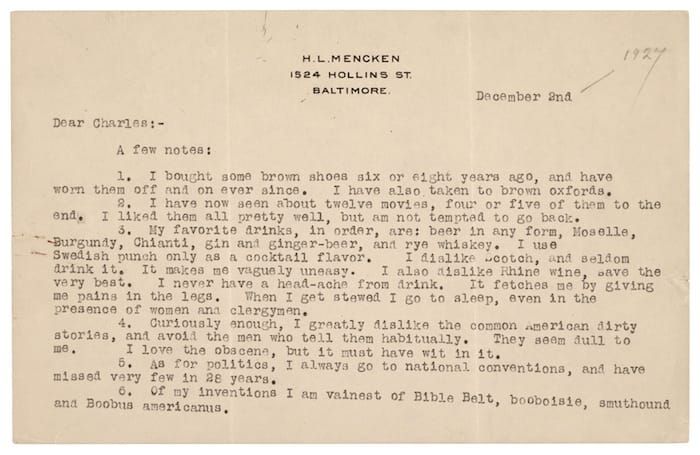
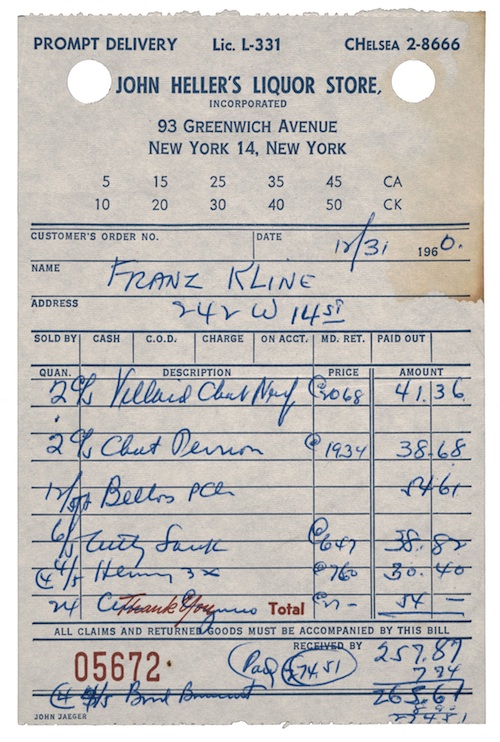
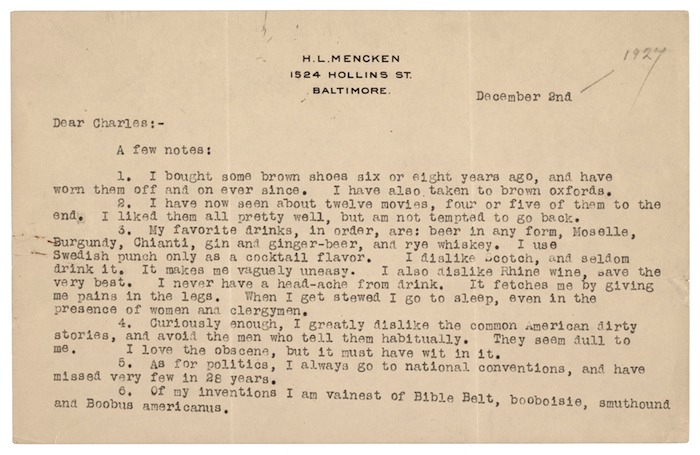
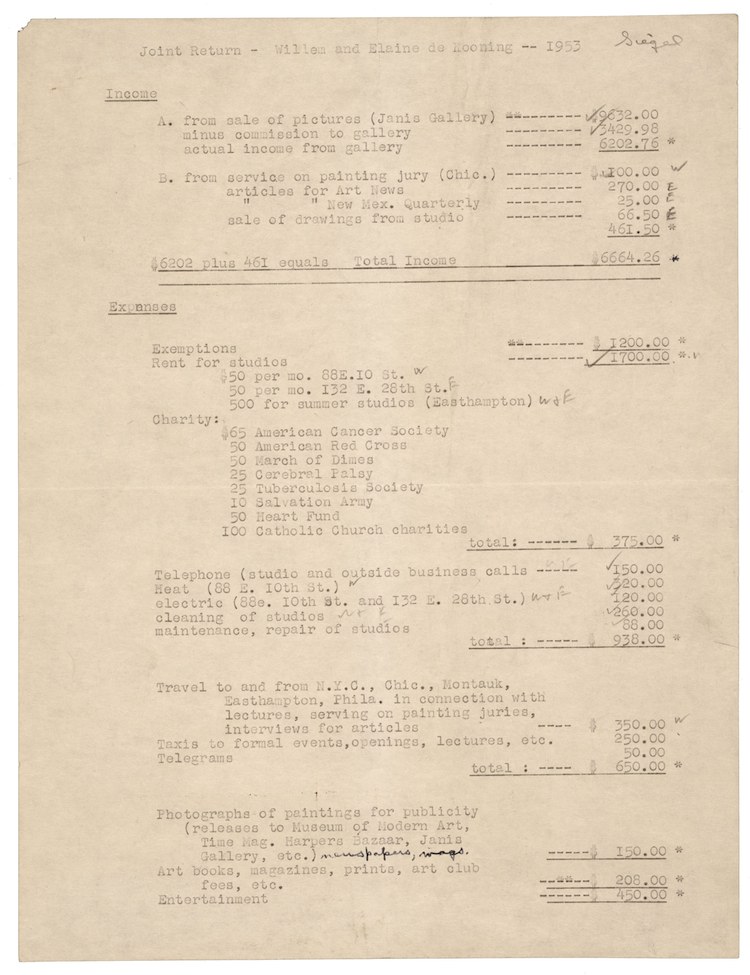
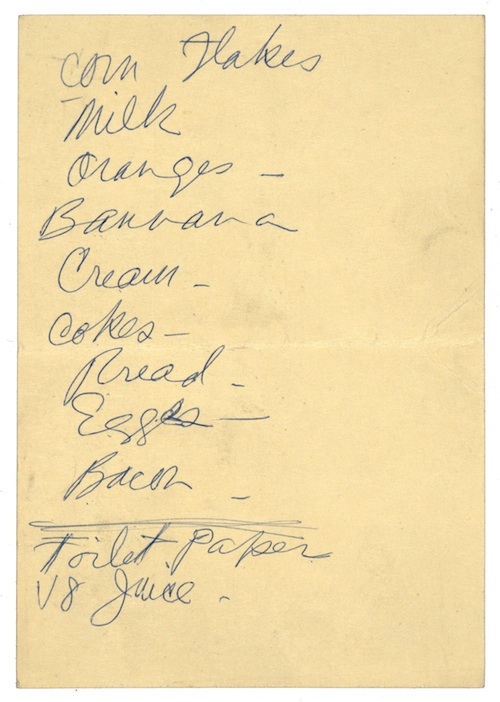
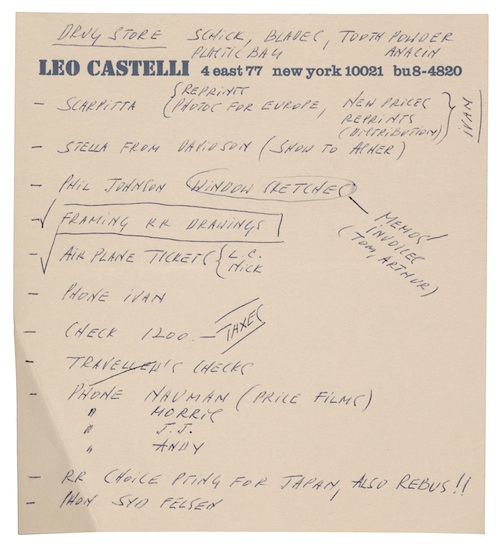
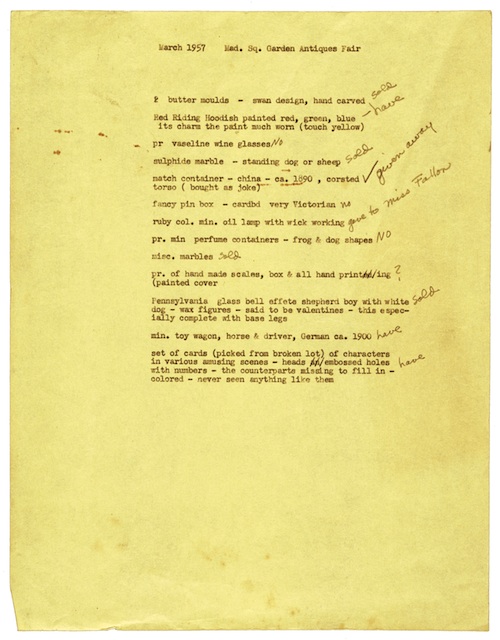
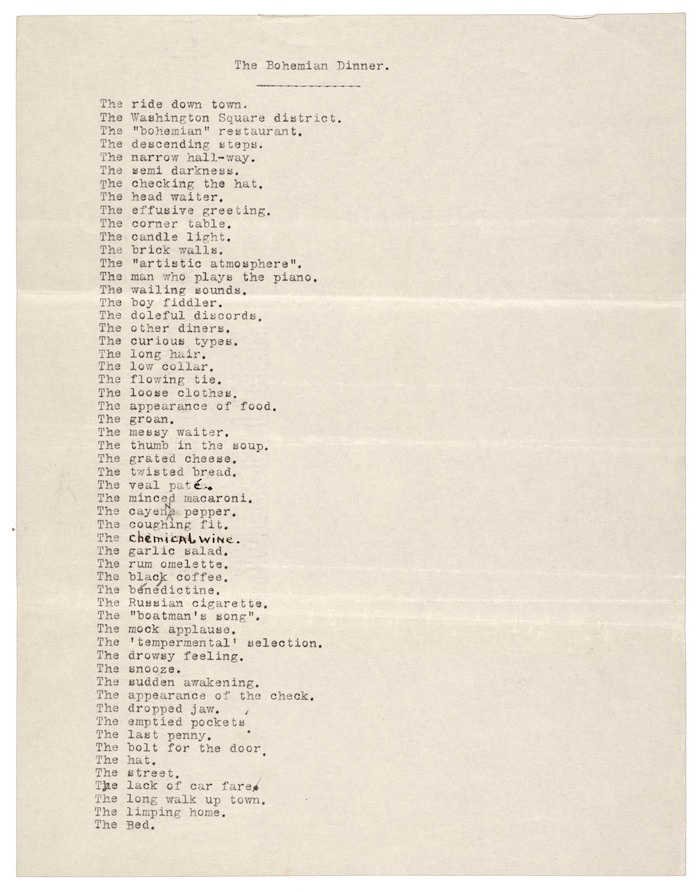
Manuscript archivist Liza Kirwin raked together an exhaustive pile of historically significant notes, grocery lists, and romantic ephemera from some of the 20th century’s greatest artists.
Interview by Rosecrans Baldwin
What makes a list interesting?
The content, if it provides unique personal insights. Take for instance artist Gordon Newton’s list of expenses, “rent $50, materials $70, food $15, bad habits $5,” or painter James Penney’s list of survival tips, including “spend what you have on materials” and “don’t go back to Kansas.” Also graphic lists are of great visual interest. Painter and printmaker Benson Bond Moore made a picture list of ducks he drew in various poses. Continue reading ↓
All images courtesy the author and Princeton Architectural Press, all rights reserved.
Interview continued
How do you characterize a list’s significance?
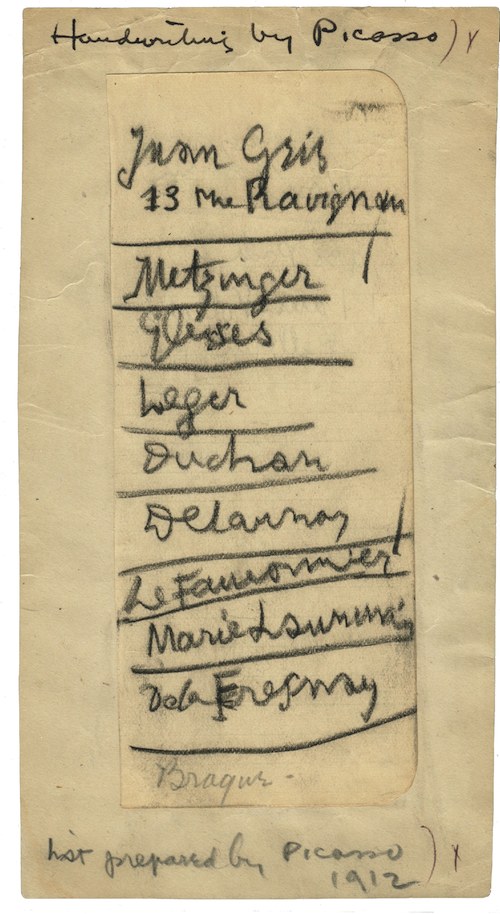
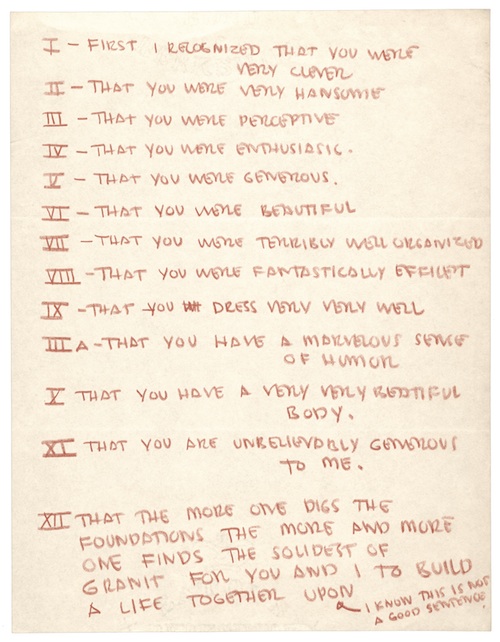
Lists can be historically significant, throwing a flood of light on an important person or event. Picasso made a list of the artists he recommended for the 1913 Armory, which was the first major exhibition of modern art in United States. One learns that he couldn’t spell, but more importantly, the artists he recommended—Duchamp, Léger, and Juan Gris, among others—stole the show. Curiously he left his fellow Cubist and collaborator Georges Braque off the list. There are also lists that seem to have great personal significance, such as Janice Lowry’s list of “50 people I need to forgive,” or Eero Saarinen’s list of reasons why he loves his soon-to-be-second wife along with his list of best-case and worst-case scenarios for divorcing his first and current wife.
How would you characterize yourself as a list-maker?
I am a compulsive list-maker. My daily lists are task-driven and highly enigmatic: 1. call Bluebird; 2. Wednesday; 3. GSA; 4. do paperwork; etc. It only takes a few days for me to lose the meaning altogether. I’m also a crosser-outer. I love making lists and crossing off “done” items as grand accomplishments. Sometimes I write “to-dos” after the fact, just to cross them off.
Can one list be compared to another?
It’s interesting to compare one person’s successive to-do lists. Undoubtedly the most tiresome tasks—clean the garage or make doctor’s appointment—migrate, undone, from one list to another.
What’s your favorite list in the group?
My favorite list is by painter Philip Evergood. He glued and taped together scraps of paper and business cards to create a list of services available near his studio for framing, supplies, galleries, etc. It grew organically. I like the look of it. There’s a small pinhole at the top. I imagine he tacked it up on his studio wall next to his phone.
As a manuscript curator, what do you make of the Library of Congress’s plan to archive Twitter messages?
As a manuscript curator, I’m drawn to the handwritten. While I realize that our future is digital, I can’t get very excited about emails as culturally rich primary sources (though surely they are). My first reaction to hearing that the Library of Congress was archiving Twitter messages was, good, one less thing we have to save! But it does make me wonder about the sheer volume of inane tweets that are being preserved in perpetuity—it seems like a waste of cyberspace.