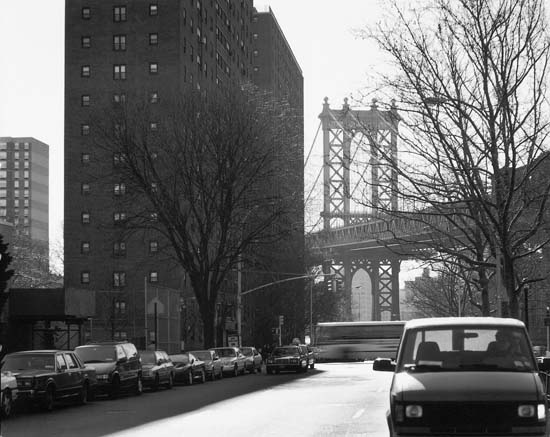
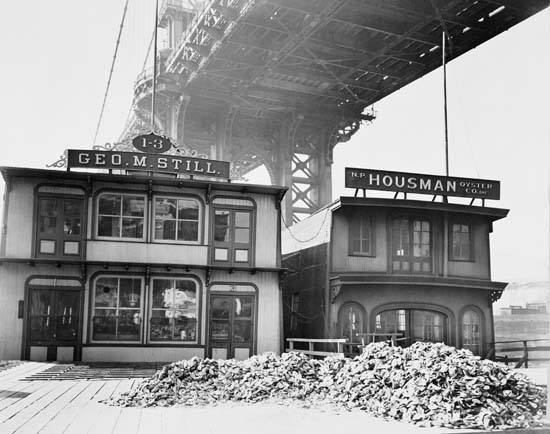
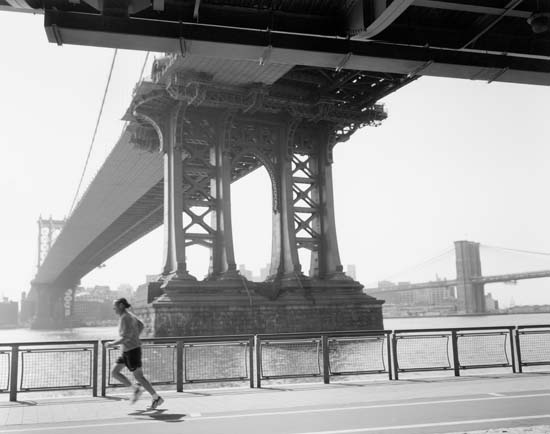
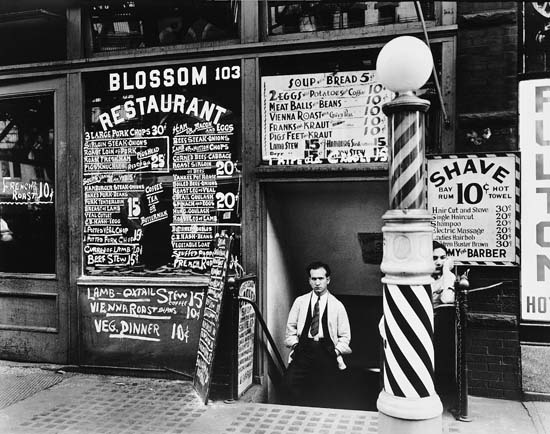
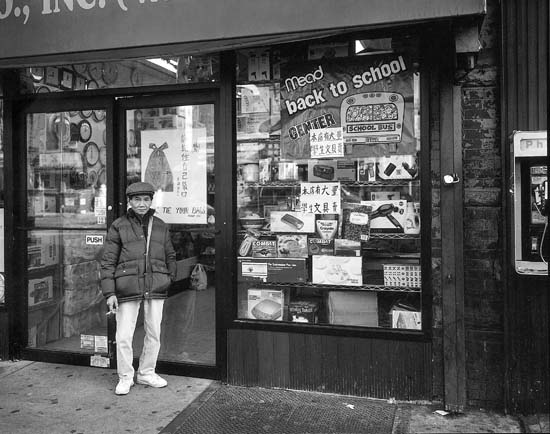
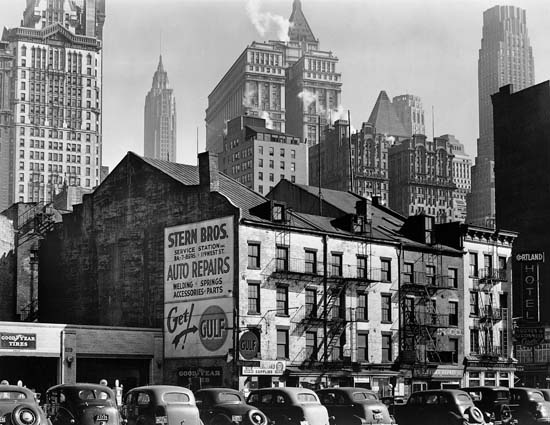
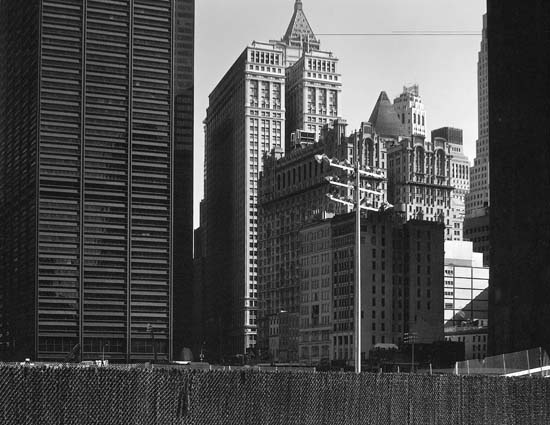
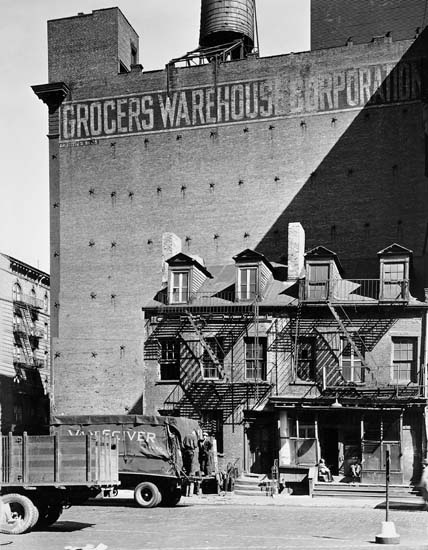
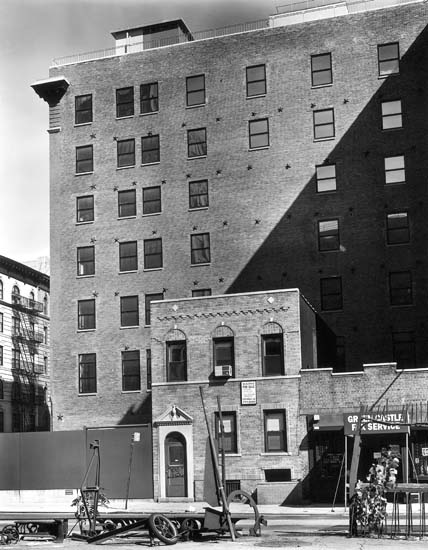
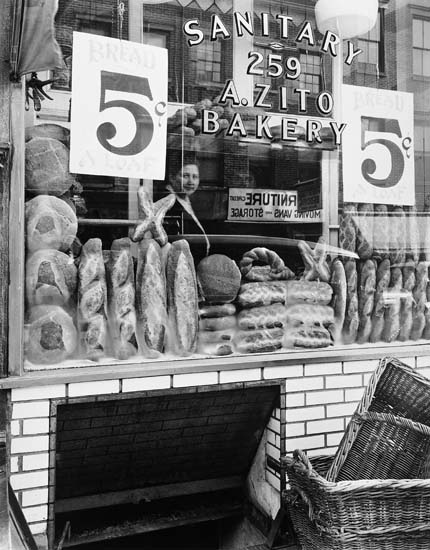
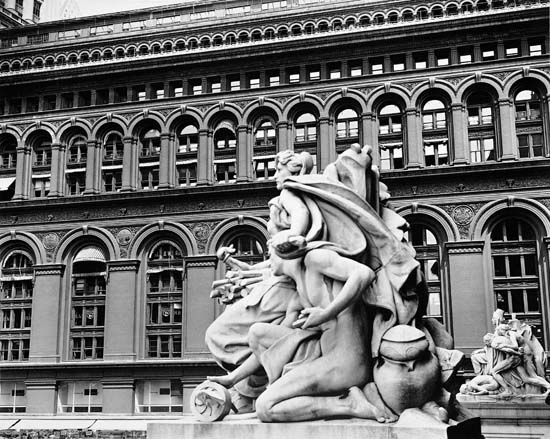
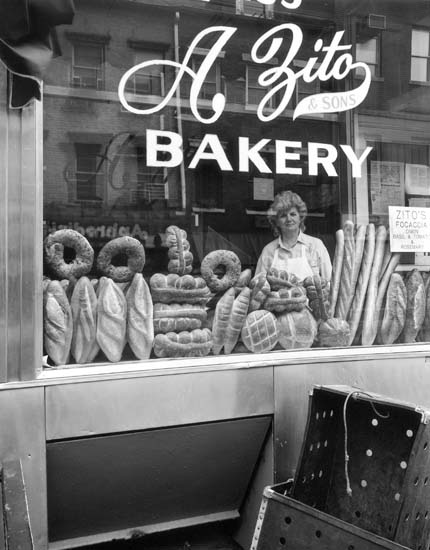
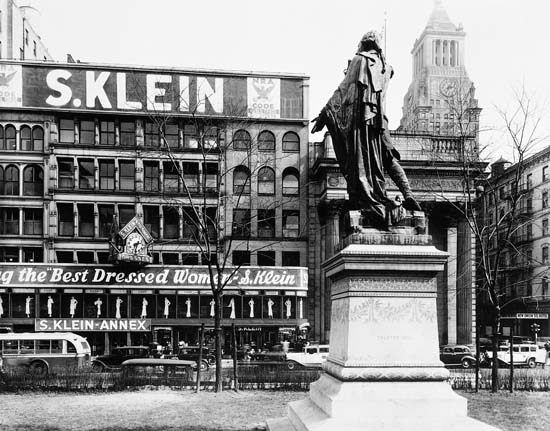
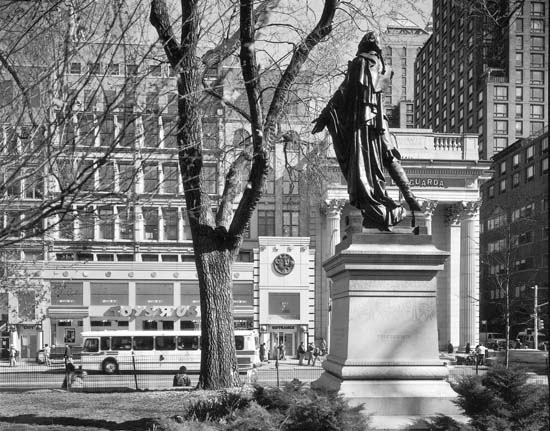
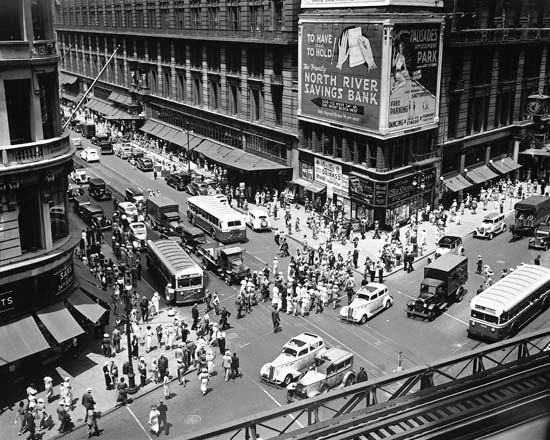
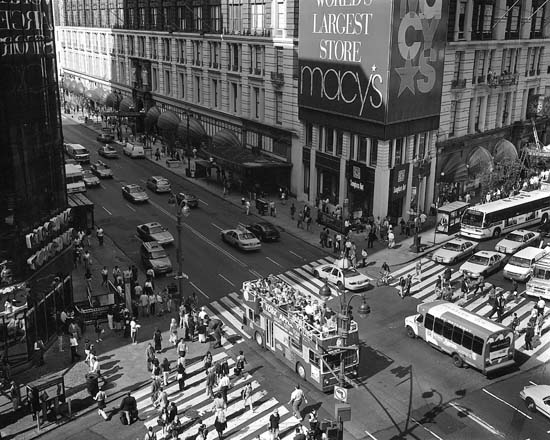
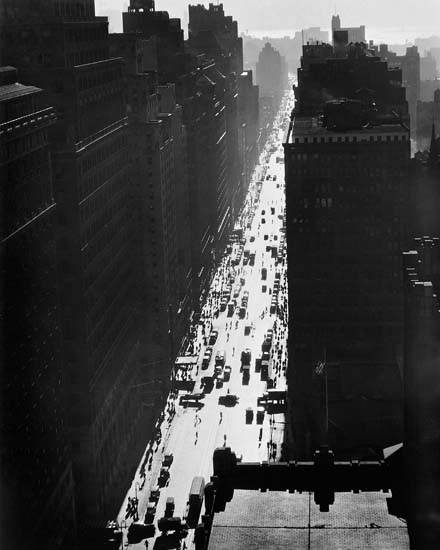
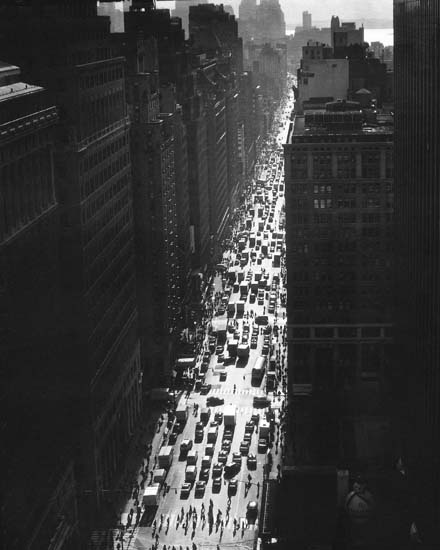
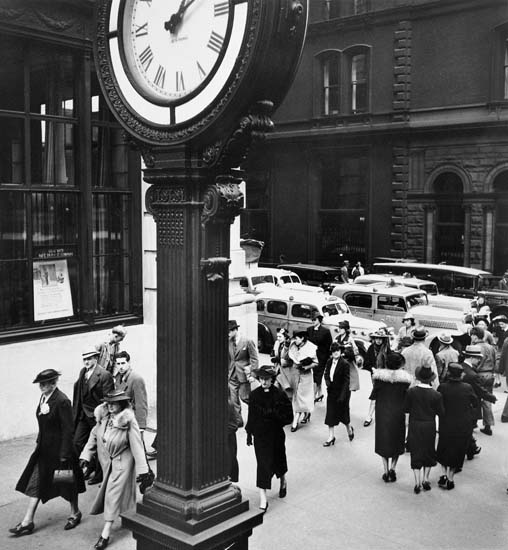
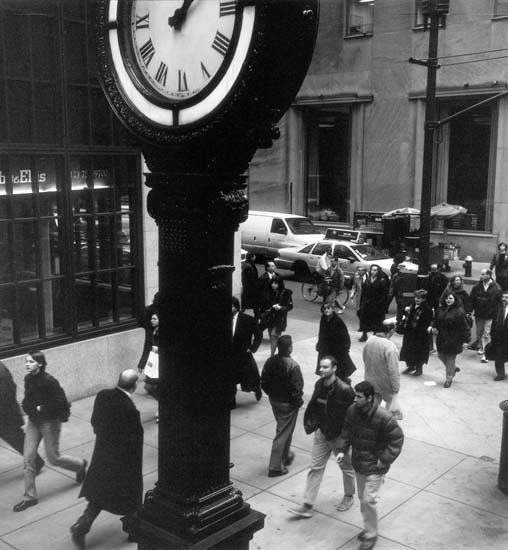
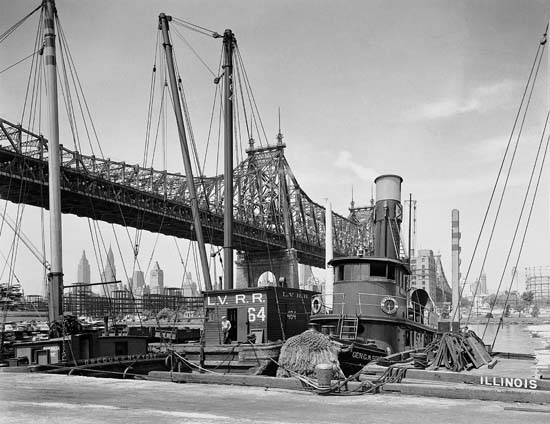
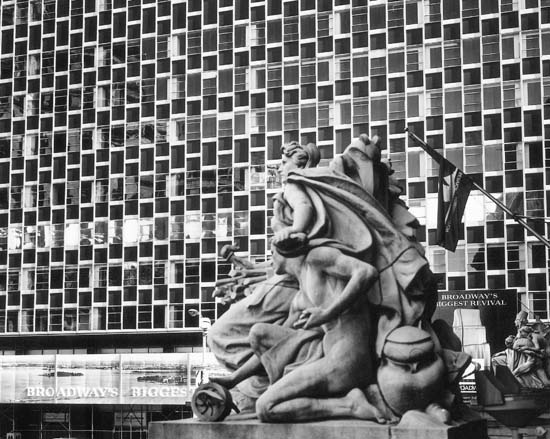
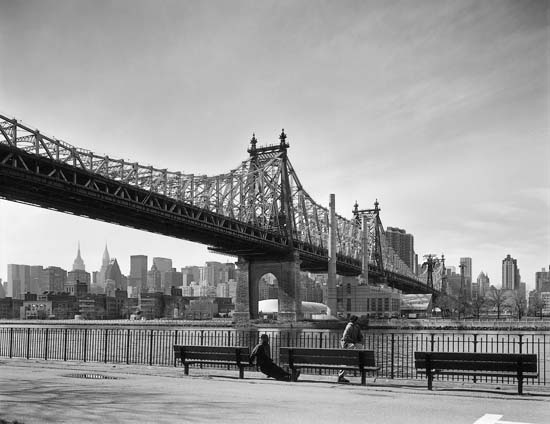
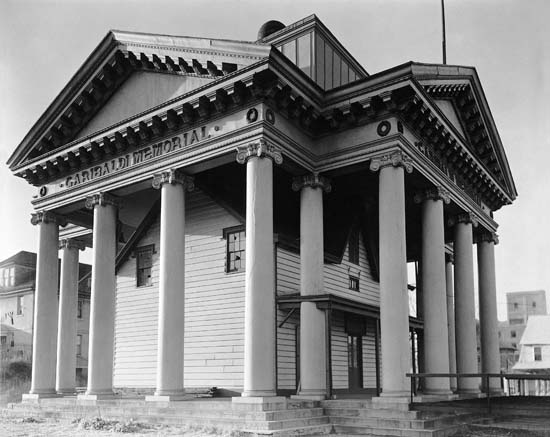
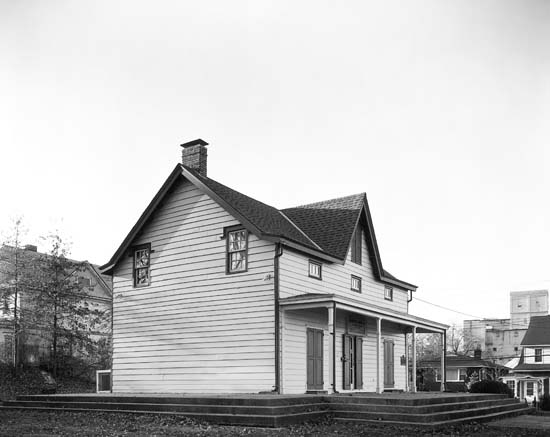
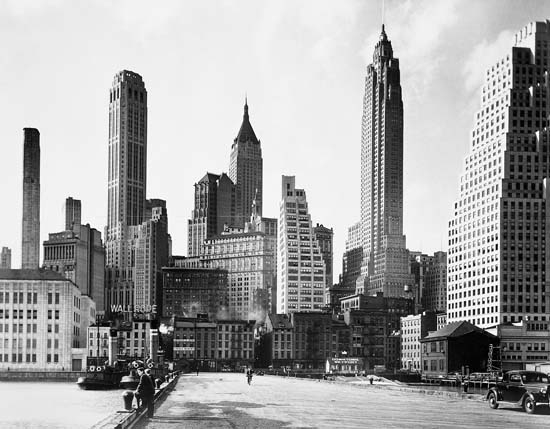
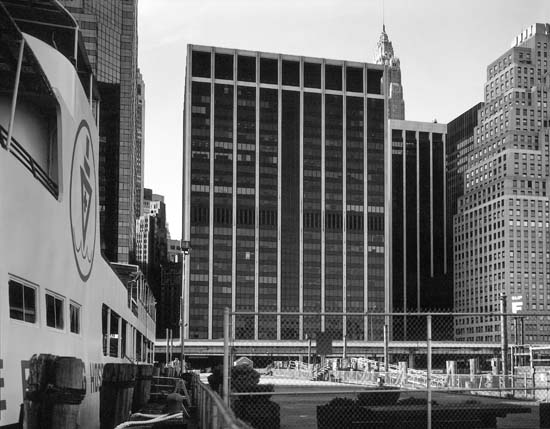
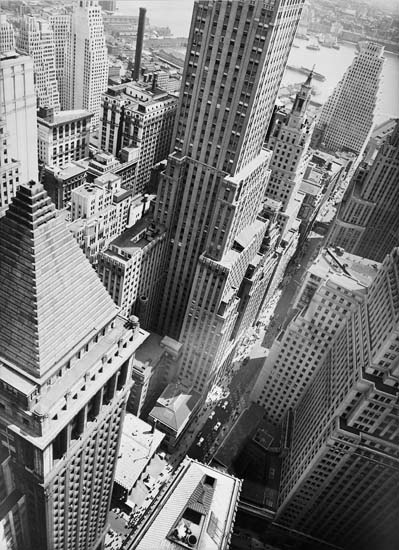
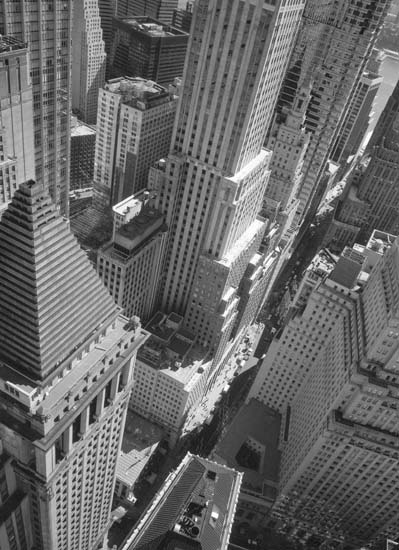
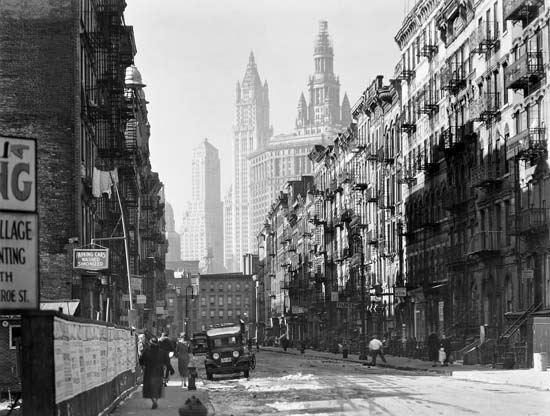
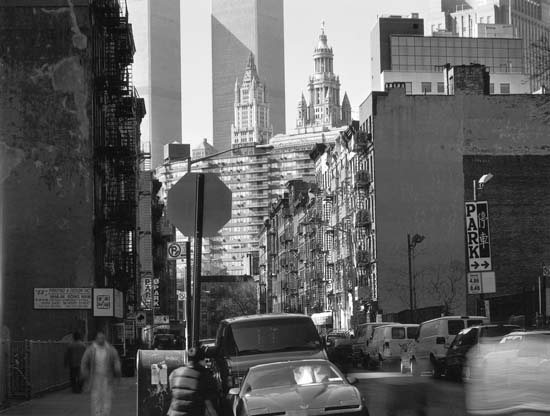
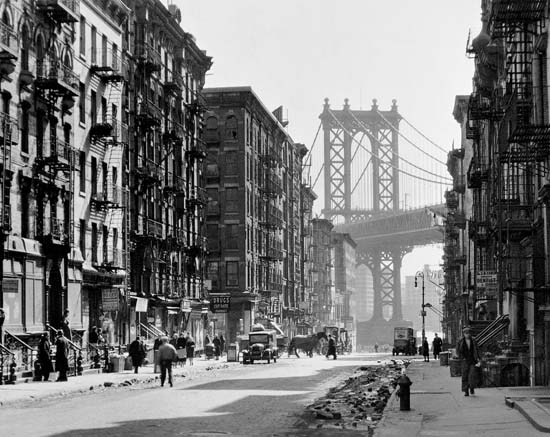
When we first saw Levere’s photographs from his book New York Changing—reshooting Berenice Abbott’s 1930s pictures of New York City—we were amazed, blown away by how modern Manhattan has changed.
From the introduction to Levere’s book:
Rephotography is a tricky idea—at least it was for me. Ours is a culture that prizes originality; I grew up believing that inspiration had to come from within. While it was fine to pay homage to the acknowledged giants, stalking a ghost would be the act of an obsessive. I reacted quite negatively in 1994 when my friend Ellen Carey, professor of art at Hartford College, introduced me to the idea of choosing a photographic mentor and taking his work “beyond his life and into ours.”
Three years later, I began to understand what she meant. I was at an auction preview filled with images by Man Ray, Ansel Adams, Weegee, Avedon—all brilliant; but what stopped me in my tracks was Abbott’s vintage contact print Broadway near Broome Street, photographed in 1935, from “Changing New York.” I lived on Broome Street. Here I stood, unexpectedly looking at the view outside my building, taken six decades before. I could not help but compare and contrast. And before long I was imagining what my camera would see.
Almost every building Abbott had photographed still stood, but Broome Street back then was a two-way street paved with cobblestones. The trendy shoe store I passed every day was once the Bank of Sicily Trust. The kosher dairy restaurant in the lower right-hand corner of the photograph revealed that observant Jews in black suits populated the area that was now a major retail location. I realized I had been living in the illusion of a permanent now. My ultra-happening Broome Street would look quaint and dusty six decades into the future.
As you can see in the gallery, nothing in New York remains fixed, all stores (except Macy’s) are replaced, even the bridges are up for tinkering. We asked Levere about the project and his process.
Did you have trouble tracking down the different locations shot in the book?
Not really. Abbott had listed the addresses of the locations often with cross streets named as well.
Were any scenes impossible to rephotograph?
I decided to photograph only when there was “something” that remained. Even just a fire hydrant or a manhole cover. So that the viewer could look and see in the pair something that remained to “author” or confirm the relationship between the images in comparison.
By spending so much time with Abbott’s pictures, are there aspects of New York life in the 30’s that you feel nostalgic for?
I have a great appreciation for the architecture of the 30’s. And with having studied American architectural history of the 19th and 20th century, New York City is like an open book for me every time I walk down the street. I wouldn’t say nostalgic as much as appreciative of the craft and quality that was created during that time period.
New Yorkers are used to seeing buildings torn down and then replaced in a few months—what do you think are the subtler changes we miss? What shows up after 70 years?
My interests are connected to how buildings change and are reused throughout their lives. A cornice is removed, a door or window removed. An extra floor added or subtracted. Commercial becomes residential—the life beyond the original architect’s vision. So when good buildings are just removed and replaced by newer bigger “better” structures in NYC, too often the results sadden me. I miss the texture, depth, hand-craft, and human relationship of older buildings. I realize to stand still is to move backwards, but architecture today in NYC today too often feels like it is only creating wealth and almost nothing to do with creating community.