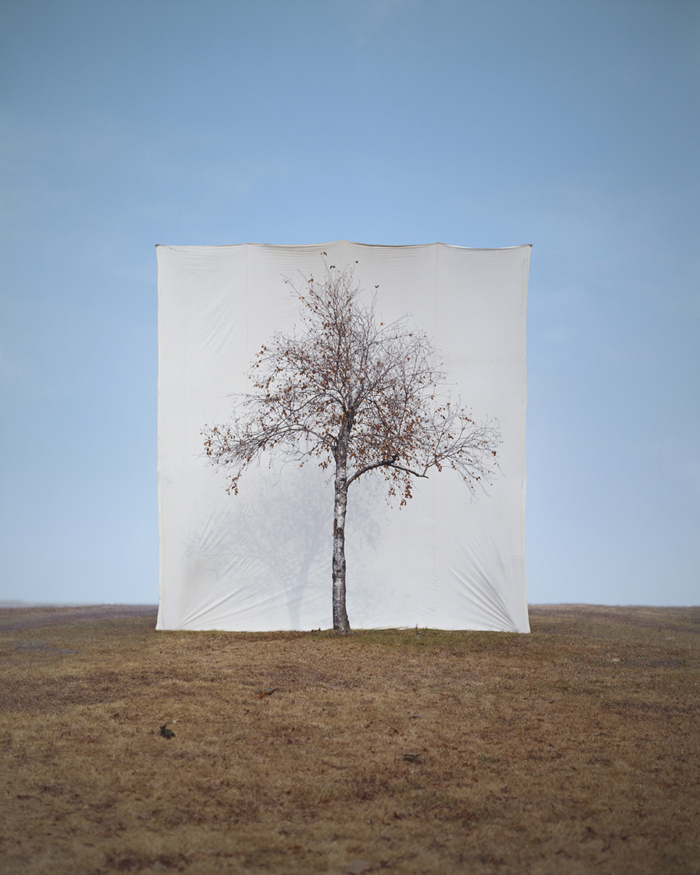

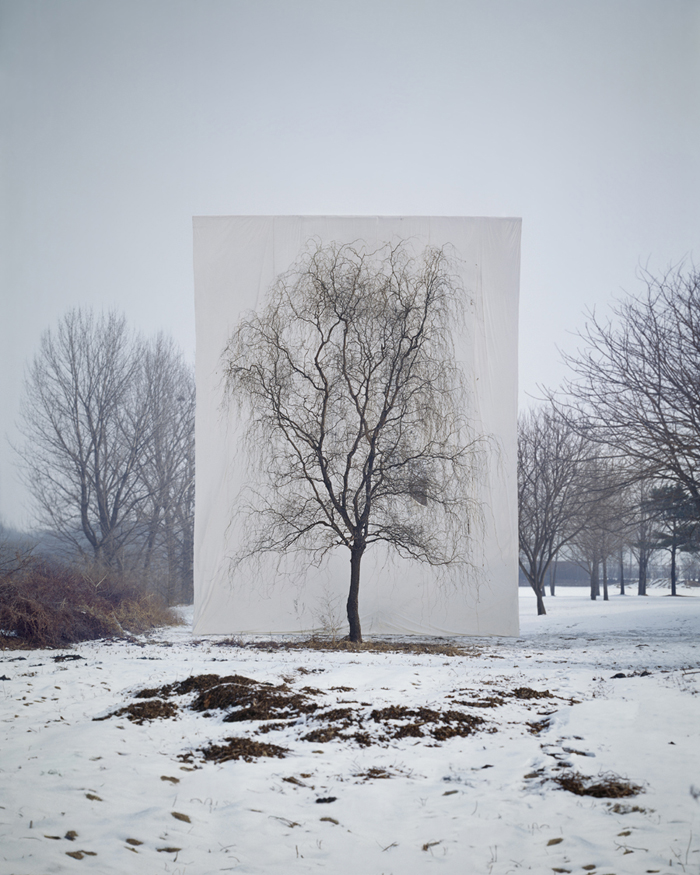
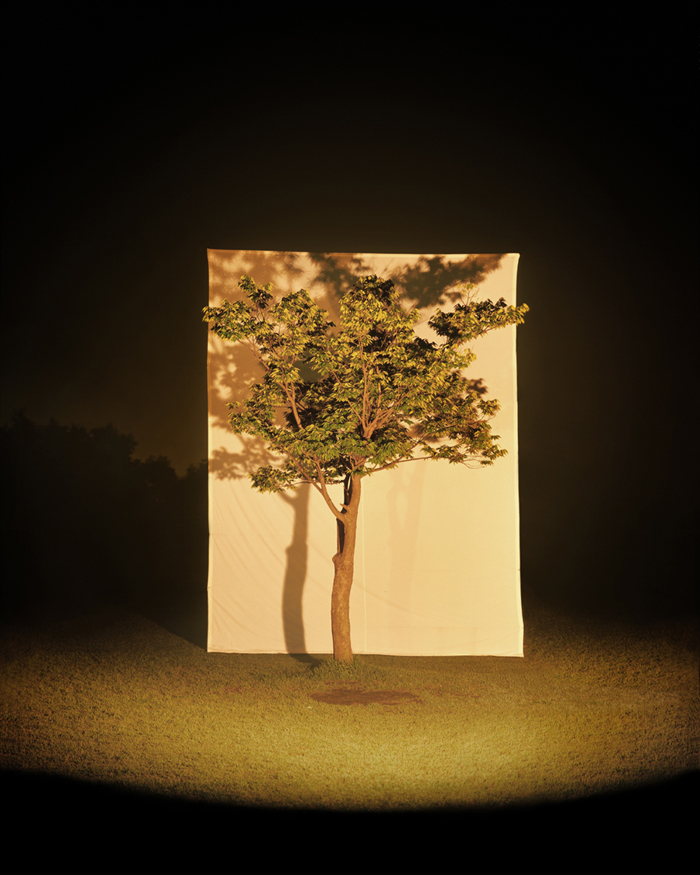
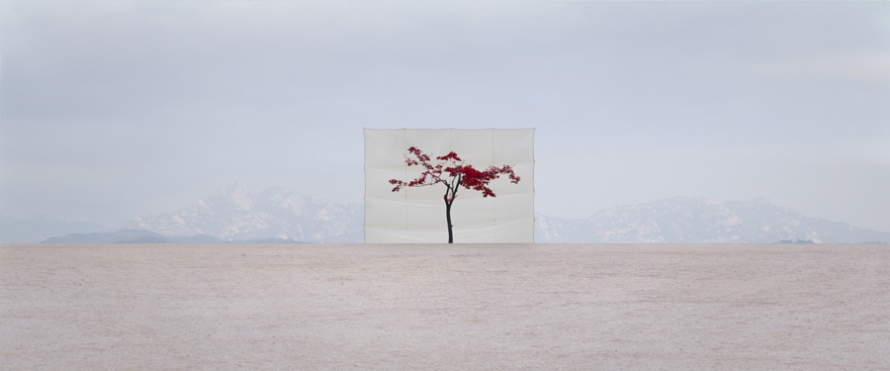
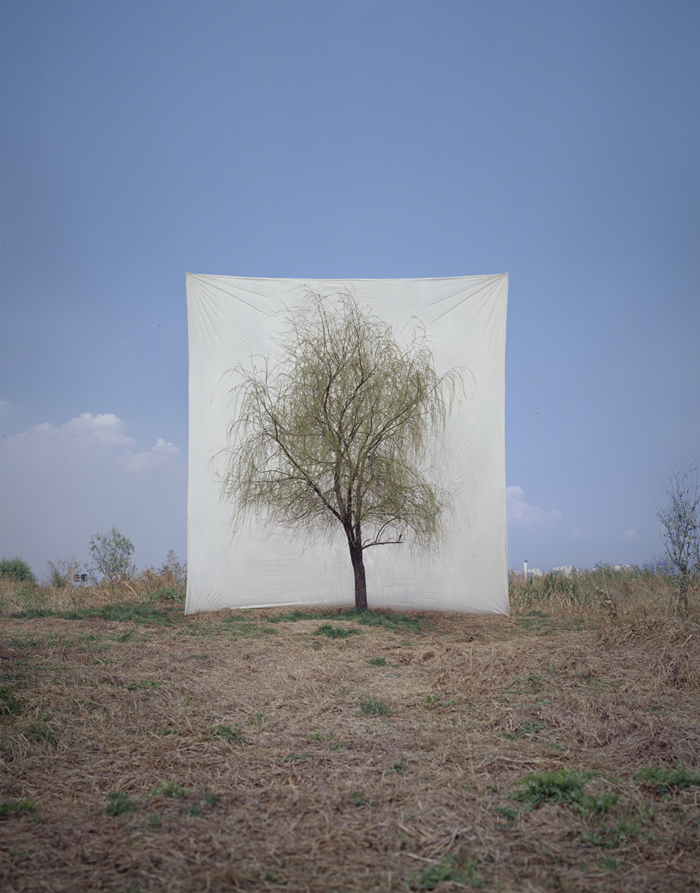
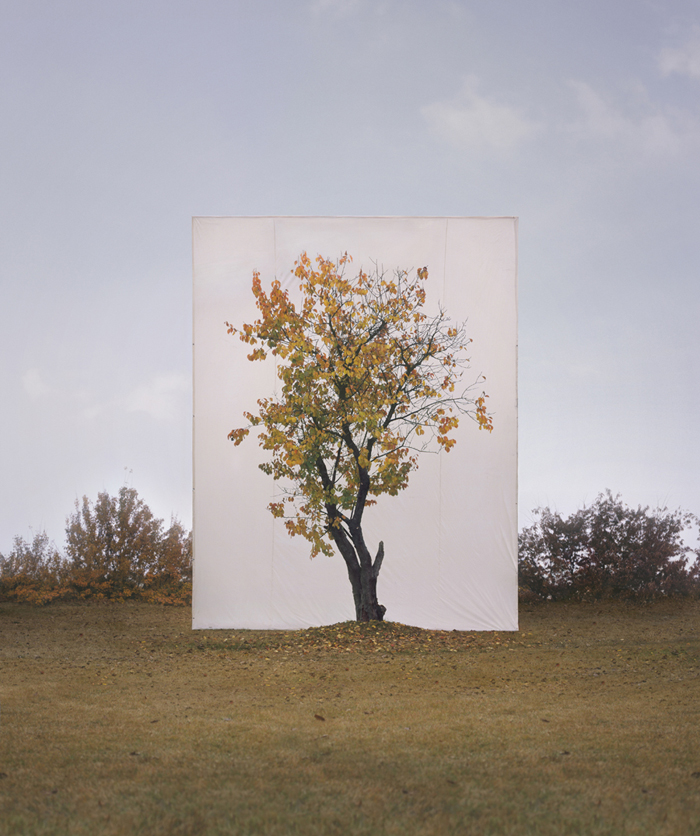
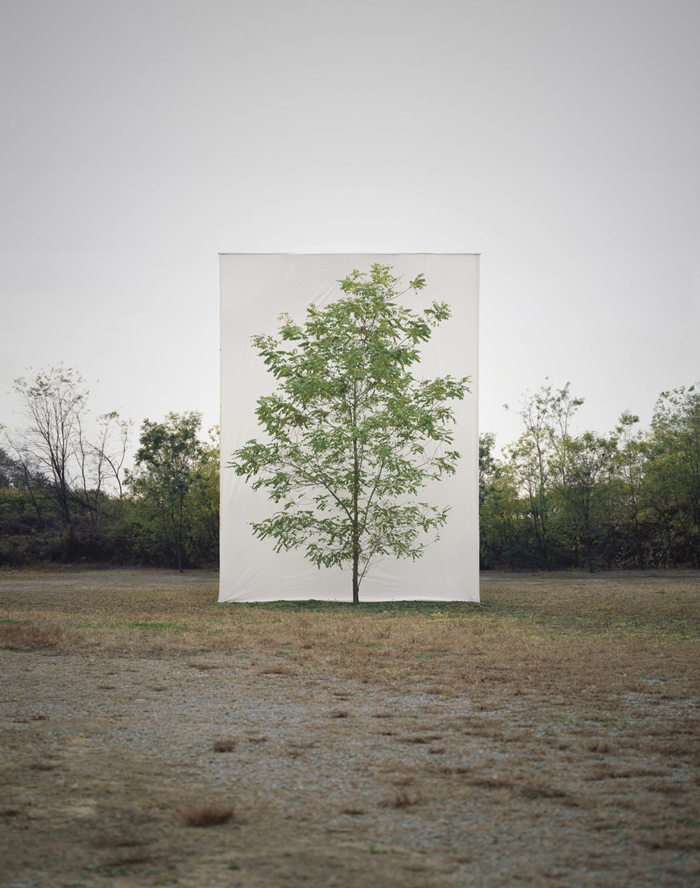
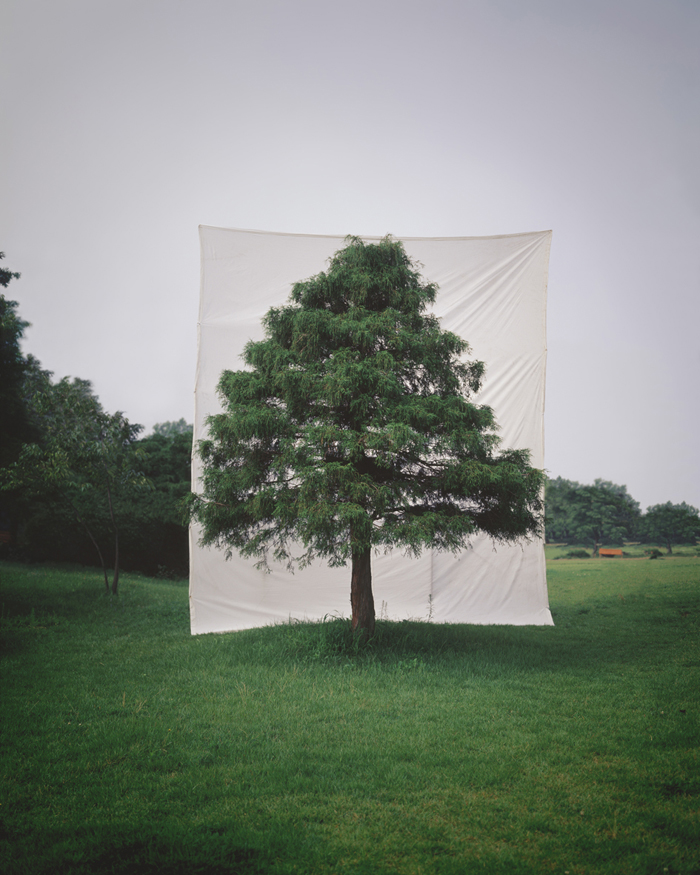
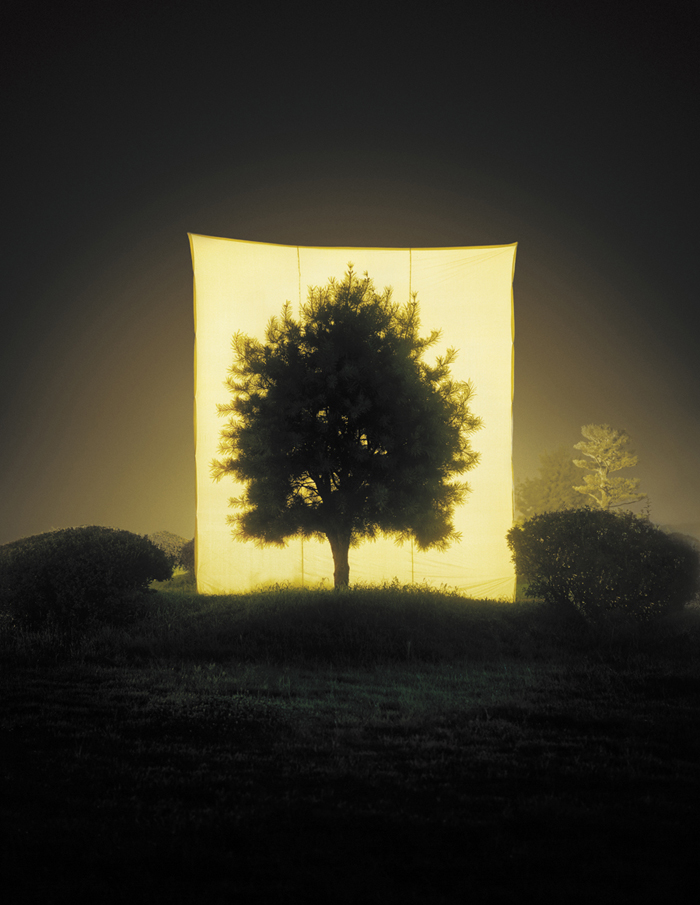
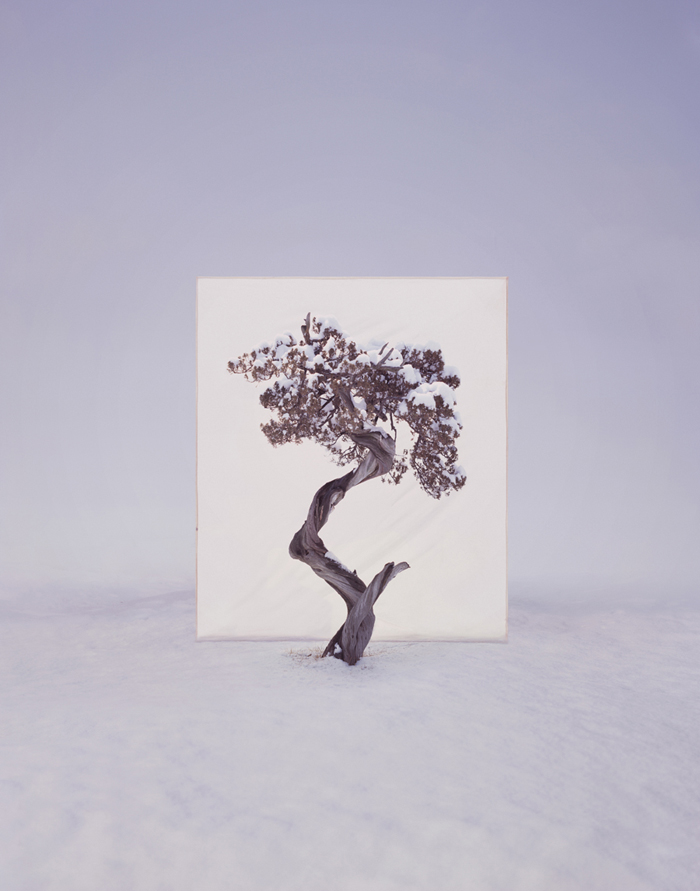
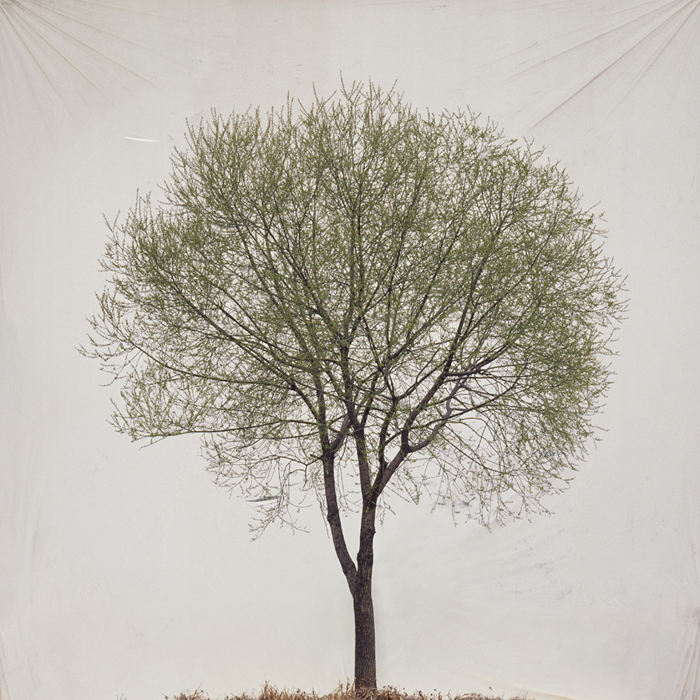
Myoung Ho Lee’s photos use a complicated process to create a simple image: trees separated from their surroundings, hinting at the world beyond. In this series, “TREE,” the “photography-act” is more than a click. The canvas that frames each tree is there by human design, turning the object into a subject, pulling it out of the landscape.
Myoung Ho Lee is represented by Gallery Zandari, Seoul, Korea (prints are available through Lens Culture). His latest exhibition “TREE” shows at Zandari through Nov. 19, 2008. In addition to his art, Myoung Ho Lee lectures in photography at Seoul’s Joong-Ang University. All photographs © Myoung Ho Lee, courtesy Gallery Zandari.
What initially drew you to photography? Where does this series fit in with the rest of your work?
Photography is an appealing art medium. Unlike other art forms that only convey artists’ reason and emotion, photography encourages discourse where the artist and audience can share their feelings and thoughts through a place found and revealed. That approach attracted me as the most appropriate art medium.
So far I have worked mostly in Korea. But in the future I want to expand my field to the wider world. If so, I believe, I might discover better subjects. As you can see from these photographs, all trees are different species in this series. Such a variety represents a crowd of people or a diversity of beings in a metaphorical sense. In this regard, I would like to include other trees overseas in my work.
What do you like about trees?
Trees are attractive objects in that they enable people to think philosophically and appreciate aesthetically. But too often, we don’t recognize the value of ordinary mundane objects around us. Seeing trees in a refreshing way or restoring the value of trees is to awaken all beings on earth in my work.
The landscapes around the trees are simple and uncomplicated, is this intentional? How do you choose these settings?
I intended to optimize my work. That is, I wanted to use only necessary words, rather than flowery language. I believe that a good artist should not impose their opinions upon the audience with an excess of things. Rather, he or she should reduce more and more to the point where there is nothing to eliminate.
In some pictures it looks like there are balloons or lanterns in the background; why are they here?
I tried to separate a tree from its environment in those pictures. The background here indicates the world and the tree represents the beings in the world. The added balloons imply another world, invisible but full of charming stories, which might exist beyond this world.
Why have you titled the series “Photography-Act”?
The essence of photography is to introduce places of my choice to my audience and inspire them. I desired to express my discourse on photography as performance art.
Are you exploring the limitations of photography in your work?
I can say yes. I will develop assorted stories concerning photography through a variety of projects in the future. My “Photography-Act” projects can be categorized into several steps. Now I work on separating objects from their surroundings by installing the canvas, but for the next series I am planning to make the backgrounds intervene with subjects that are represented on canvas. For the following project, I will focus on objects and surroundings beyond the canvas. Thus, the project is to evoke diverse discourses on the art medium—photography.
The white backgrounds in your photos give a starling first impression—they look almost like billboards for nature. Why did you use them?
Instead of painting on canvas, I install a canvas behind real objects. This is a device for Photography-Act. Other art media are involved in artists’ reason and emotion in a more direct way, whereas I take an approach to reveal an object’s reality the way it is. This is one of the precise methods to articulate the essence of photography as art work.
This series reminds me of temporary environmental installation art. Does your work intend to combine a number of artistic disciplines?
Yes. This is a “Photography-Act” project, but a number of discourses from the history of photography and art are embraced. The nature of art is to reproduce, which means food for thought in the artist’s mind should be delivered to spectators. That’s the role of the artist. Beyond that, interpretation is up to the audience. Through this project, I try to compare or liken the essence of photography to that of representational art.